


How to Care for Your Moroccan Rug: A Comprehensive Guide
Moroccan rugs are more than just floor coverings; they are vibrant pieces of art, steeped in history and tradition. Their unique designs and plush textures can transform any space into a cozy and inviting haven. But owning one of these beautiful rugs comes with the responsibility of proper care to ensure its longevity and maintain its stunning appearance. This guide provides practical tips and essential knowledge on how to care for your Moroccan rug and keep it looking its best for years to come.
Understanding Your Moroccan Rug
Before diving into specific care tips, it’s helpful to understand what makes Moroccan rugs so special. These rugs are typically hand-knotted from natural wool, often using dyes derived from plants and minerals. This natural construction contributes to their unique character and inherent durability but also makes them susceptible to certain types of damage if not properly cared for.
Different types of Moroccan rugs exist, each with its own distinctive features. Beni Ourain rugs, known for their thick pile and minimalist geometric designs, require different care than Boucherouite rugs, which are crafted from recycled fabrics and tend to be more delicate. Understanding what kind of rug you own will inform your care decisions.
Regular Maintenance: The Key to Longevity
The cornerstone of proper Moroccan rug care is consistent maintenance. Regular cleaning prevents dirt and debris from becoming embedded in the fibers, which can cause wear and tear over time. Here’s a breakdown of essential routine practices:
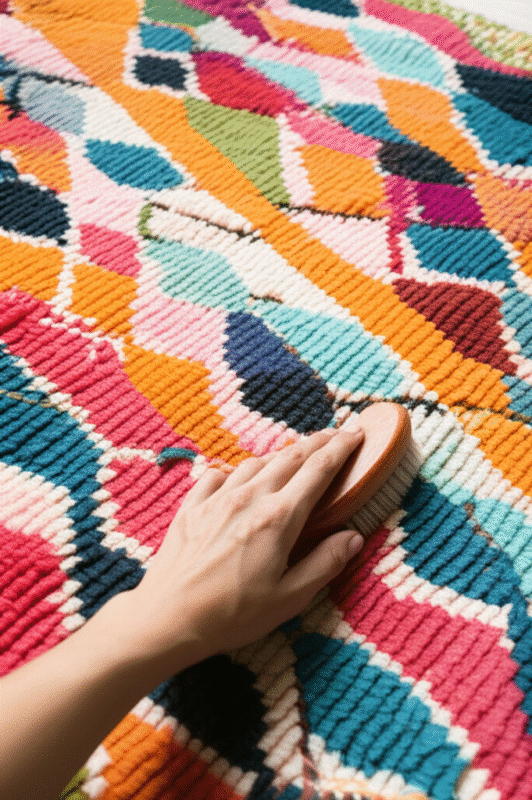
- Vacuuming: Vacuum your rug once or twice a week, depending on foot traffic. Use a vacuum cleaner with a suction-only setting or a brush roll setting on the highest pile setting to avoid damaging the delicate fibers. Avoid using the beater bar on high pile rugs, as it can pull and fray the wool. Always vacuum in the direction of the pile to lift dirt effectively.
- Shaking Out Small Rugs: For smaller Moroccan rugs, consider taking them outside and shaking them vigorously to dislodge loose dirt and debris. This is a simple yet effective way to keep them clean between vacuuming sessions.
- Rotating Your Rug: Rotate your rug every few months to ensure even wear. This prevents certain areas from being exposed to excessive sunlight or foot traffic, which can cause fading and uneven wear patterns.
Dealing with Spills and Stains
Accidents happen, and spills are inevitable. The key to minimizing damage is to act quickly and appropriately. Here’s what to do when faced with a spill on your Moroccan rug:
- Act Fast: The faster you address a spill, the easier it will be to remove. Blot the spill immediately with a clean, dry cloth or paper towel. Avoid rubbing, as this can spread the stain and damage the fibers.
- Use the Right Cleaning Solution: For most spills, a mixture of mild dish soap and water is sufficient. Test the solution on an inconspicuous area of the rug first to ensure it doesn’t cause discoloration. Gently blot the stain with the soapy water solution, working from the outside in.
- Rinse and Dry: Once the stain is lifted, rinse the area with clean water to remove any soap residue. Blot the area dry with a clean towel. You can also use a fan or hairdryer on a low setting to speed up the drying process.
- For Stubborn Stains: For more stubborn stains, consider consulting a professional rug cleaner who specializes in natural fiber rugs. They have the expertise and specialized equipment to safely and effectively remove difficult stains without damaging your rug.
Professional Cleaning: When to Call in the Experts?
While regular home cleaning is essential, your Moroccan rug will also benefit from professional cleaning every 12-18 months, depending on usage. Professional rug cleaners have the knowledge and equipment to deep clean your rug without causing damage. They can also treat stains and discoloration that are beyond the scope of home cleaning methods. When choosing a professional cleaner, make sure they have experience cleaning natural fiber rugs and use gentle, environmentally friendly cleaning solutions.
Protecting Your Moroccan Rug: Preventative Measures
Prevention is always better than cure. Here are some preventative measures you can take to protect your Moroccan rug from damage and extend its lifespan:
- Use Rug Pads: Rug pads provide a cushion between the rug and the floor, preventing wear and tear. They also help to prevent the rug from slipping and sliding, which can be especially important on hard surfaces. Choose a rug pad made from natural materials like felt or rubber.
- Protect from Direct Sunlight: Prolonged exposure to direct sunlight can cause the dyes in your Moroccan rug to fade. If your rug is in a sunny area, consider using curtains or blinds to filter the light. You can also rotate the rug regularly to ensure even exposure to sunlight.
- Avoid Placing in High-Moisture Areas: Moroccan rugs are susceptible to mildew and mold growth if exposed to excessive moisture. Avoid placing them in bathrooms or other areas with high humidity. If your rug does get wet, dry it thoroughly as soon as possible.
Storing Your Moroccan Rug Properly
If you need to store your Moroccan rug, proper storage is essential to prevent damage. Clean the rug thoroughly before storing it. Roll it tightly, wrap it in breathable fabric like cotton or muslin, and store it in a cool, dry place away from direct sunlight and humidity. Avoid storing your rug in a plastic bag, as this can trap moisture and lead to mold growth.
**The Art of Rug Care: Adapting to Your Rug’s Specific Needs
Ultimately, how to care for your Moroccan rug hinges on understanding its specific characteristics and adapting your care routine accordingly. A delicate silk rug will require a gentler touch than a hardy wool kilim. By paying attention to the rug’s fiber content, construction, and response to cleaning methods, you can tailor your approach for optimal results.Don’t be afraid to research best practices for specific rug types and seek advice from professionals when needed.
By following these tips and understanding the unique needs of your Moroccan rug, you can ensure it remains a cherished heirloom for generations to come. Not only will your rug retain its beauty and value, but you’ll also be preserving a piece of cultural heritage. Treat your rug with the care it deserves, and it will continue to grace your home with its beauty and warmth for many years.