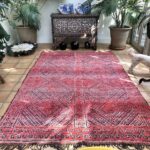



- Moroccan Rugs: Your Guide to Authentic Handmade Berber Treasures
- The Legacy of Berber Rugs
- Understanding Different Types of Moroccan Rugs
- The Appeal of Handmade Rugs
- Identifying Authentic Berber Rugs
- Caring for Your Moroccan Rug
- Why Choose a Moroccan Rug?
Moroccan Rugs: Your Guide to Authentic Handmade Berber Treasures
Moroccan rugs have captivated the world for centuries with their vibrant colors, intricate patterns, and rich history. More than just decorative pieces, these moroccan rugs are cultural artifacts, each telling a story woven by skilled Berber artisans. Understanding the nuances of these handmade masterpieces allows you to appreciate their value and choose a rug that truly speaks to you. This guide will delve into the world of authentic Berber rugs, helping you navigate the market and find the perfect piece to enrich your home.
The Legacy of Berber Rugs
The history of Berber rugs is deeply intertwined with the indigenous people of North Africa, the Berbers. For generations, these nomadic and semi-nomadic tribes have relied on rug weaving for practical, cultural, and economic purposes. Historically, rugs served as bedding, blankets, saddle blankets, and even burial shrouds. The patterns and motifs woven into these textiles are far from random; they often carry symbolic meanings representing fertility, protection, and the stories of the weaver’s life and community.
Passed down through generations of women, the art of weaving is a sacred tradition. Each rug is a unique expression of the weaver’s creativity and skill, making them truly one-of-a-kind. The wool used in these rugs is typically sourced from local sheep and hand-spun, adding to the rug’s authentic and organic feel. The dyes are often derived from natural sources such as plants, minerals, and insects, resulting in a stunning array of earthy and vibrant hues.
Understanding Different Types of Moroccan Rugs
The diversity of Moroccan rugs is vast, reflecting the different Berber tribes and regions where they are woven. Here are some of the most popular styles you’ll encounter:
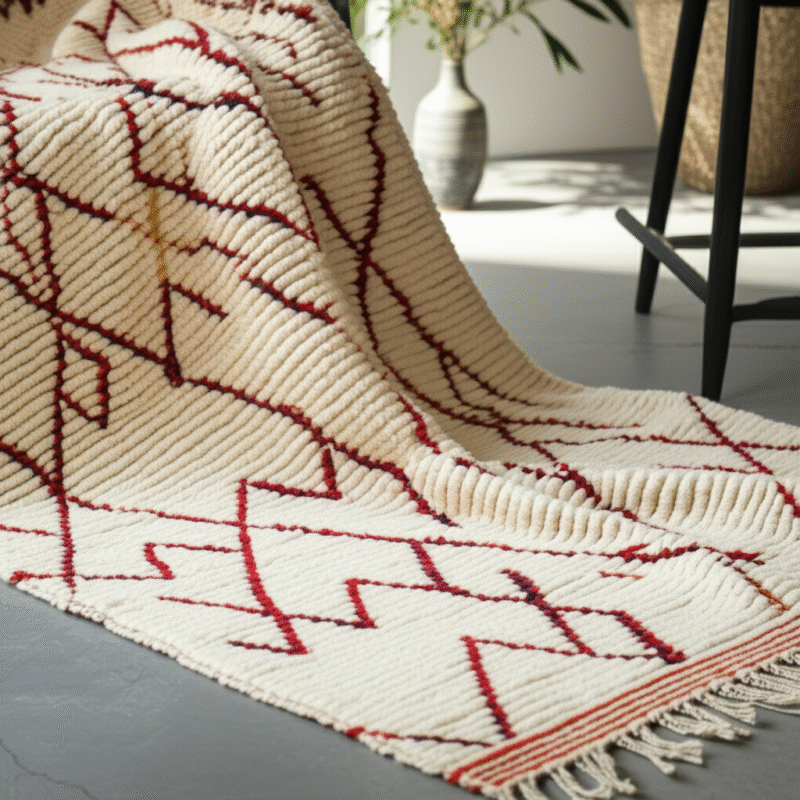
Beni Ourain: Perhaps the most well-known type, Beni Ourain rugs are characterized by their thick, plush wool, minimalist geometric designs, and neutral color palettes, often featuring brown or black lines on a cream or white background. They are incredibly soft and luxurious underfoot, making them a popular choice for living rooms and bedrooms.
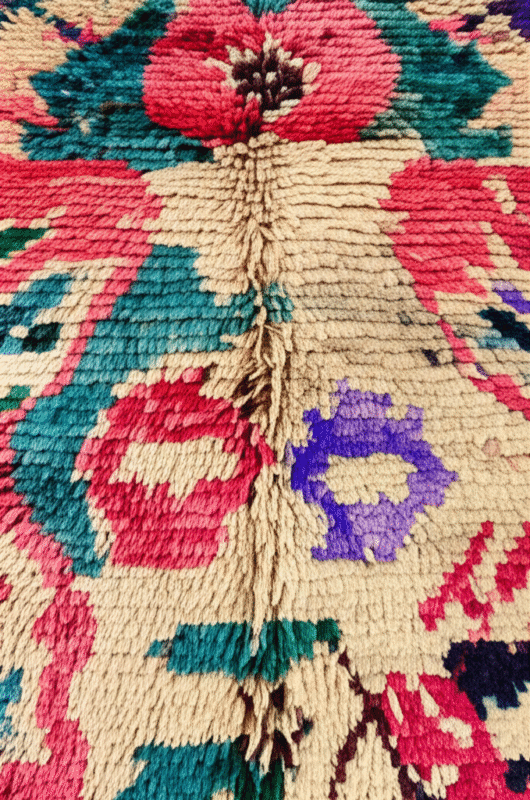
Azilal: These rugs are bolder and more expressive than Beni Ourain. Woven with a mix of wool and cotton, Azilal rugs often feature vibrant colors and intricate patterns that tell personal stories and express the weaver’s creativity. They are typically lighter and more flexible than Beni Ourain rugs.
Boucherouite: Unlike other types, Boucherouite rugs are made from recycled materials such as scraps of fabric, wool, and plastic. This makes them a sustainable and incredibly vibrant option. They feature a patchwork of colors and textures, creating a whimsical and eclectic look.
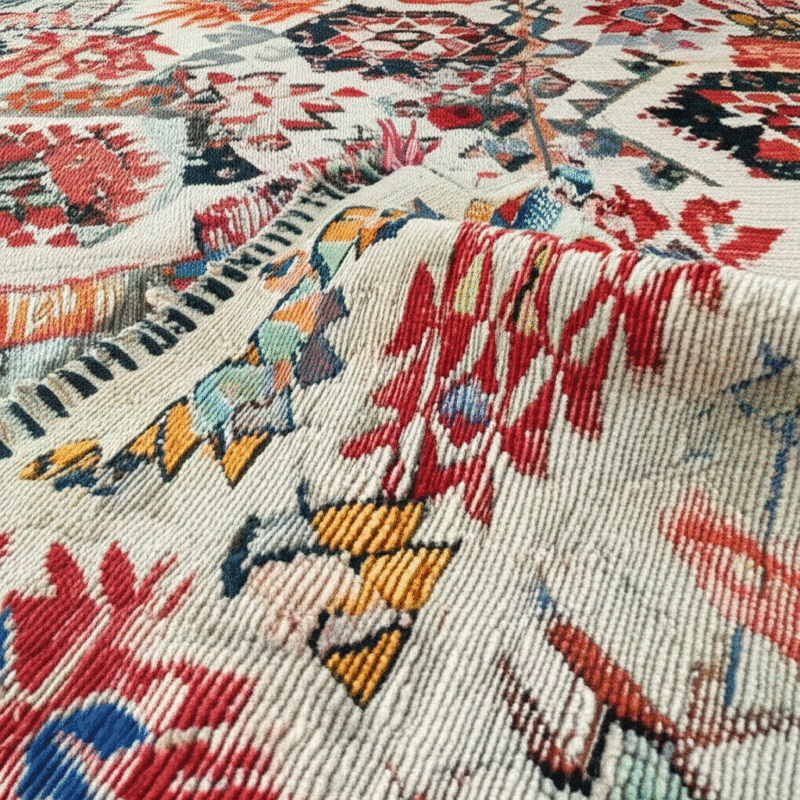
Kilim: These flat-woven rugs are known for their durability and intricate geometric patterns. Lacking the pile found in other rug types, Kilims are lighter and more versatile, making them suitable for high-traffic areas.
The Appeal of Handmade Rugs
While machine-made rugs may offer a lower price point, they lack the soul and character of handmade Moroccan rugs. The beauty of a handwoven rug lies in its imperfections – the subtle variations in color, the slight asymmetry of the design, and the unique texture of the wool. These imperfections are not flaws; they are evidence of the human hand and the artistry that went into creating the piece.
Furthermore, handwoven rugs are far more durable than their machine-made counterparts. The tight weave and high-quality materials used in their construction ensure that they will last for generations with proper care. Investing in a handmade Berber rug is not just a purchase; it’s an investment in a piece of art that will enrich your home for years to come.
Identifying Authentic Berber Rugs
With the increasing popularity of Moroccan rugs, it can be challenging to distinguish between authentic berber rugs and mass-produced imitations. Here are some key indicators to look for:
Material: Authentic Berber rugs are primarily made from hand-spun wool. Examine the fibers closely; they should feel natural and slightly rough. Look for variations in color and texture, which indicate that the wool was hand-dyed.
Design: Pay attention to the symmetry and complexity of the design. Handwoven rugs often have slight imperfections and variations in the pattern. Machine-made rugs, on the other hand, tend to have perfectly symmetrical and uniform designs.
Weave: Examine the back of the rug. The weave should be tight and consistent. Handmade rugs will often show knots and variations in the weave, while machine-made rugs will have a more uniform and even weave.
Origin: Inquire about the rug’s origin and the weaver’s background. Reputable dealers will be able to provide information about the rug’s history and the community where it was made.
Price: Authentic Berber rugs are typically more expensive than machine-made imitations. Be wary of rugs that are priced significantly lower than similar items.
Caring for Your Moroccan Rug
To ensure that your Moroccan rug lasts for generations, proper care is essential. Here are some tips for maintaining its beauty and integrity:
Vacuum regularly: Vacuum your rug regularly to remove dust and debris. Use a vacuum cleaner with a beater bar on low suction.
Spot clean spills immediately: Blot spills immediately with a clean, dry cloth. Avoid rubbing, as this can spread the stain.
Rotate your rug: Rotate your rug every few months to prevent uneven wear and fading.
* Professional cleaning: Have your rug professionally cleaned every one to three years, depending on its age and usage.
Why Choose a Moroccan Rug?
Choosing a moroccan rugs is choosing a rich history, a dedication to craftsmanship, and a unique style statement that can enhance any space. With their intricate designs, high-quality materials, and enduring appeal, handmade Berber rugs are more than just floor coverings—they are works of art that will bring warmth, character, and a touch of cultural heritage to your home. Whether you prefer the minimalist elegance of a Beni Ourain or the vibrant energy of a Boucherouite, there is a Moroccan rug to suit every taste and style. By understanding the nuances of these stunning textiles, you can make an informed decision and choose a rug that will be cherished for years to come.