


- Moroccan Rugs: Your Ultimate Guide to the Best Handmade Berber Treasures
- A Tapestry of History: The Roots of Berber Rugs
- Understanding the Artistry: Key Types of Moroccan Rugs
- The Allure of Handmade Moroccan Rugs
- Choosing the Perfect Moroccan Rug: Tips and Considerations
- Caring for Your Berber Treasure
Moroccan Rugs: Your Ultimate Guide to the Best Handmade Berber Treasures
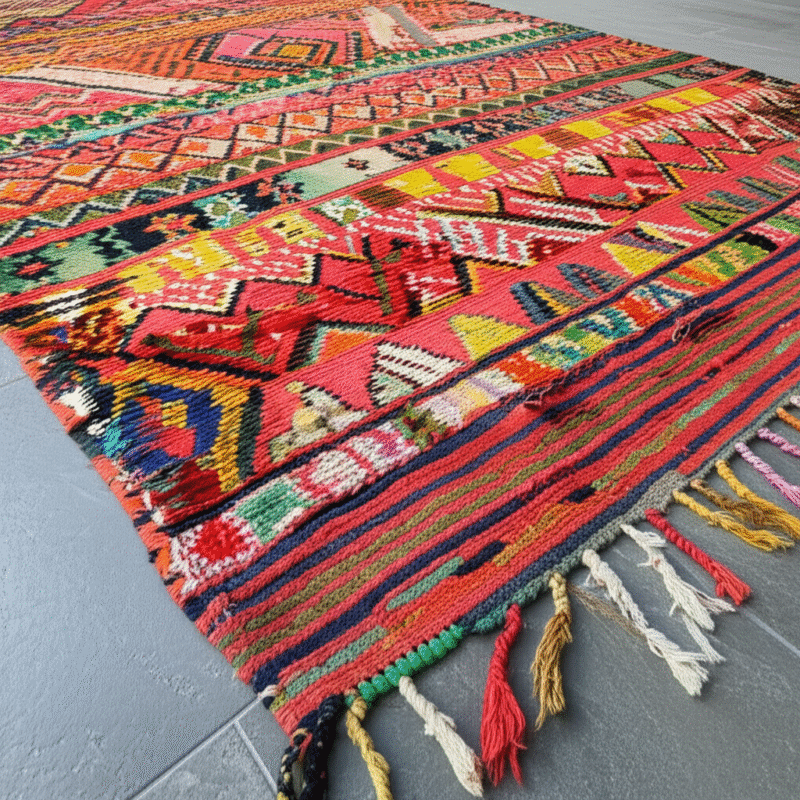
Moroccan rugs, with their rich history, intricate designs, and vibrant colors, have captivated art enthusiasts and interior designers for centuries. More than just floor coverings, these handmade textiles are cultural artifacts, each woven with stories, symbols, and the spirit of the Berber tribes who create them. This guide will take you on a journey through the fascinating world of these beautiful pieces, helping you understand their origins, appreciate their artistry, and choose the perfect one for your home.
A Tapestry of History: The Roots of Berber Rugs
The story of Marokkanische Teppiche begins with the Berber people, the indigenous inhabitants of North Africa. For generations, these nomadic and semi-nomadic tribes have relied on weaving as a vital craft, using the wool from their sheep to create textiles for practical purposes like warmth, shelter, and transportation. Over time, these utilitarian weavings evolved into intricate works of art, reflecting the weavers’ personal stories, beliefs, and connection to the land.
Different Berber tribes developed distinct weaving techniques and design motifs, resulting in a diverse range of rug styles, each with its own unique character. From the geometric patterns of Beni Ourain rugs to the colorful diamonds of Azilal rugs, each design element carries a symbolic meaning, often related to fertility, protection, or ancestral heritage.
The handmade nature of these Berber treasures adds to their inherent value. Each rug is a unique expression of the weaver’s individuality, with subtle variations in color, pattern, and knotting technique making it a one-of-a-kind piece.
Understanding the Artistry: Key Types of Moroccan Rugs
Navigating the world of Marokkanische Teppiche can feel overwhelming, given the sheer variety of styles and designs. Here’s a breakdown of some of the most popular types you’re likely to encounter:
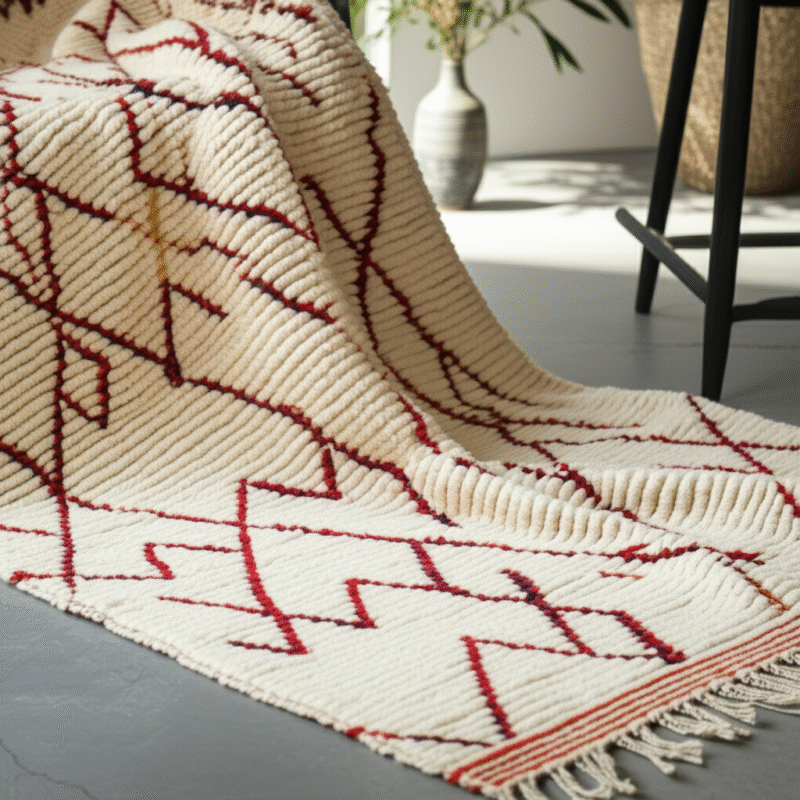
Beni Ourain: Perhaps the most iconic type of Moroccan rug, Beni Ourain rugs are characterized by their thick, plush wool and minimalist designs. Often featuring geometric patterns in shades of cream, white, and brown, these rugs exude a sense of warmth and comfort. They’re highly versatile and complement a wide range of interior styles, from bohemian to modern.
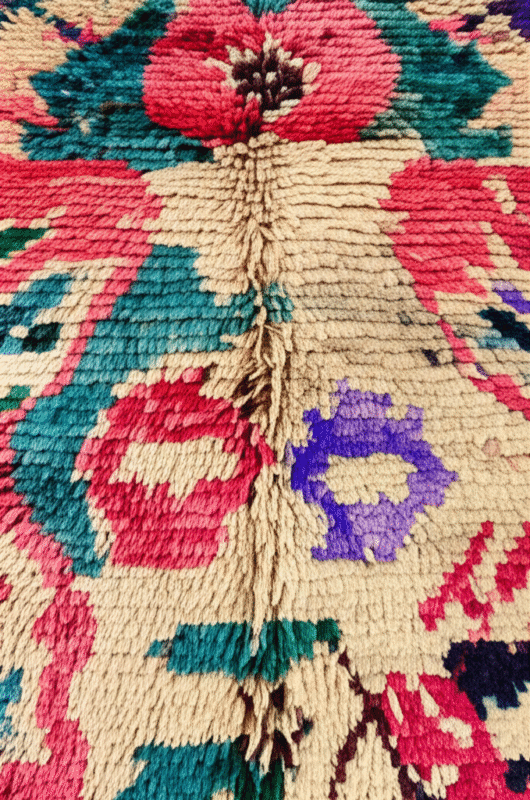
Azilal: These rugs are known for their vibrant colors, bold designs, and free-form patterns. Handmade by Berber women in the Azilal region of the High Atlas Mountains, these rugs often incorporate symbols and motifs drawn from tribal traditions and personal experiences.
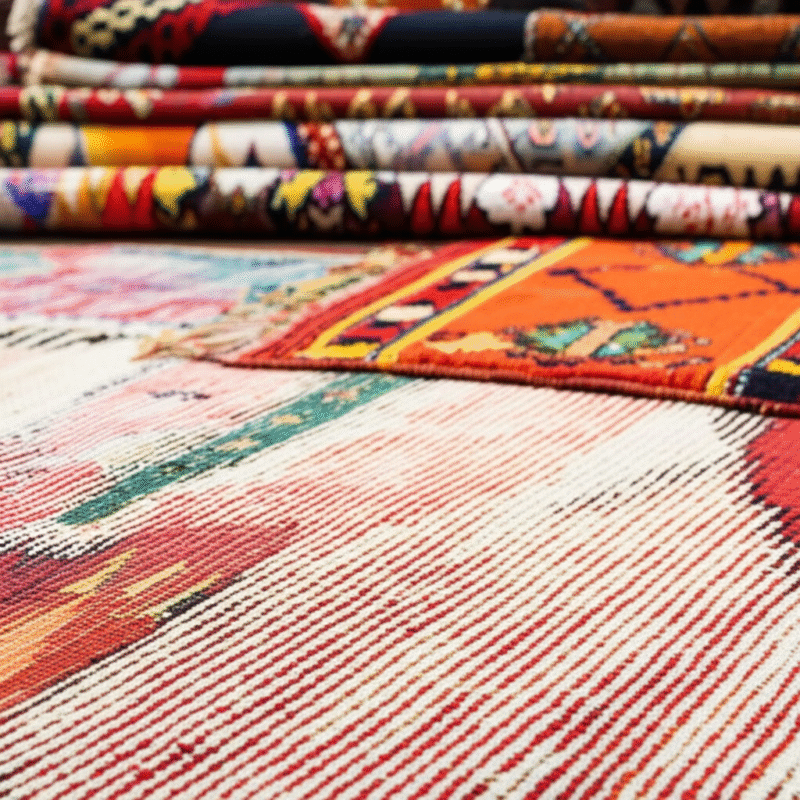
Boucherouite: A more contemporary style, Boucherouite rugs are made from recycled fabrics, such as cotton and synthetic fibers. Known for their eclectic mix of colors, textures, and patterns, these rugs offer a sustainable and affordable way to add a touch of Berber charm to your home.
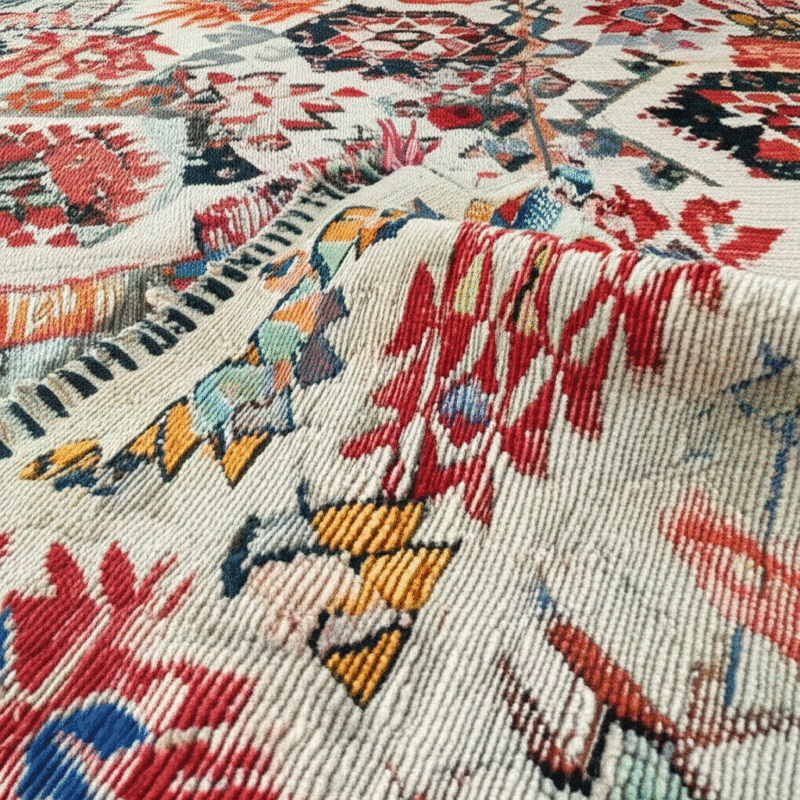
Kilim: While technically a flatweave rather than a knotted rug, Kilim rugs are an integral part of Moroccan textile traditions. These rugs are woven using a tapestry technique, resulting in a durable and lightweight textile with geometric designs and vibrant colors.
Talsint: These rugs often feature a distinctive mix of patterns, including geometric shapes, floral motifs, and even abstract representations. They often incorporate both knotted piles and flatwoven sections, adding another layer of texture and visual interest.
The Allure of Handmade Moroccan Rugs
The appeal of Moroccan rugs extends beyond their aesthetic beauty. The fact that they are handmade is a significant factor in their value and desirability. Each rug represents hours, days, or even weeks of painstaking labor, passed down through generations of skilled Berber artisans.
Choosing a handmade rug means supporting traditional crafts and preserving cultural heritage. It also means owning a unique piece of art that tells a story and adds a touch of authenticity to your home. Unlike mass-produced rugs, handmade Marokkanische Teppiche are made with natural materials, such as wool, and dyes, which are often derived from plants and minerals. These materials not only contribute to the rug’s durability and longevity but also give it a distinctive texture and color palette.
Choosing the Perfect Moroccan Rug: Tips and Considerations
When selecting your Moroccan rug, consider the following:
Size and dimensions: Measure your space carefully and choose a rug that is appropriately sized and proportioned.
Color and design: Think about the color palette and design of your room and choose a rug that complements your existing décor.
Material and texture: Consider the material and texture of the rug. Wool rugs are durable and comfortable underfoot, while flatweave rugs are more lightweight and versatile.
Authenticity: Look for rugs made from natural materials and hand-knotted by Berber artisans. Inspect the rug for imperfections, which are often a sign of its handmade origin.
Budget: Marokkanische Teppiche can range in price from relatively affordable to quite expensive, depending on their size, quality, and age. Set a budget beforehand and stick to it.
Caring for Your Berber Treasure
To keep your Moroccan rug looking its best for years to come, follow these simple care tips:
Vacuum regularly to remove dust and debris.
Spot clean spills immediately with a mild detergent and water.
Professionally clean your rug every few years to maintain its color and texture.
Rotate your rug periodically to prevent uneven wear.
Investing in a Moroccan rug is more than just buying a floor covering; it’s acquiring a piece of art, history, and culture. With their unique designs, handmade craftsmanship, and timeless appeal, these Berber treasures will add warmth, character, and a touch of exotic elegance to your home for years to come. Embrace the beauty and craftsmanship of these unique textiles and discover the perfect one to tell your own story.