


- Moroccan rugs: Effortless Guide to Handmade Berber Styles
- The Soul of Moroccan Rugs: Berber Weaving Tradition
- Exploring Different Berber Rug Styles
- Caring for Your Handmade Moroccan Treasure
- Incorporating Moroccan Rugs Into Your Home
- Authentic Berber Craftsmanship: Finding the Right Piece
Moroccan rugs: Effortless Guide to Handmade Berber Styles
Moroccan rugs, with their vibrant colors, intricate patterns, and rich history, have captivated the hearts of interior designers and homeowners for decades. More than just floor coverings, these handmade masterpieces tell stories woven from the cultural heritage of the Berber tribes who create them. If you’re looking to add a touch of authentic Moroccan charm to your home, understanding the different Berber styles and origins is key. This guide will walk you through the fascinating world of Moroccan rugs, offering insights into their creation, design, and how to seamlessly incorporate them into your living space.
The Soul of Moroccan Rugs: Berber Weaving Tradition
The art of Moroccan rug making is deeply intertwined with the Berber people. For centuries, these indigenous tribes have inhabited the mountainous regions and vast deserts of Morocco, preserving their unique traditions and passing them down through generations. Weaving is an integral part of Berber culture, primarily a task undertaken by women. These rugs aren’t simply decorative items; they’re a form of self-expression, a record of tribal history, and a symbol of the weaver’s personal experiences. The symbols and motifs woven into the rugs relate to fertility, nature, spirituality, and daily life.
The wool used in Moroccan rugs is typically sourced from local sheep, known for their high-quality fibers. The spinning, dyeing, and weaving processes are all done by hand, often using traditional wooden looms and natural dyes extracted from plants and minerals. This meticulous process can take weeks, sometimes even months, to complete, resulting in a truly unique and valuable piece of art.
Exploring Different Berber Rug Styles
The diversity of Moroccan rugs is truly astounding. Each region and tribe boasts its own distinct style, characterized by specific patterns, colors, and weaving techniques. Understanding these differences can help you choose a rug that perfectly complements your personal taste and interior décor. Here are a few prominent Berber rug styles:
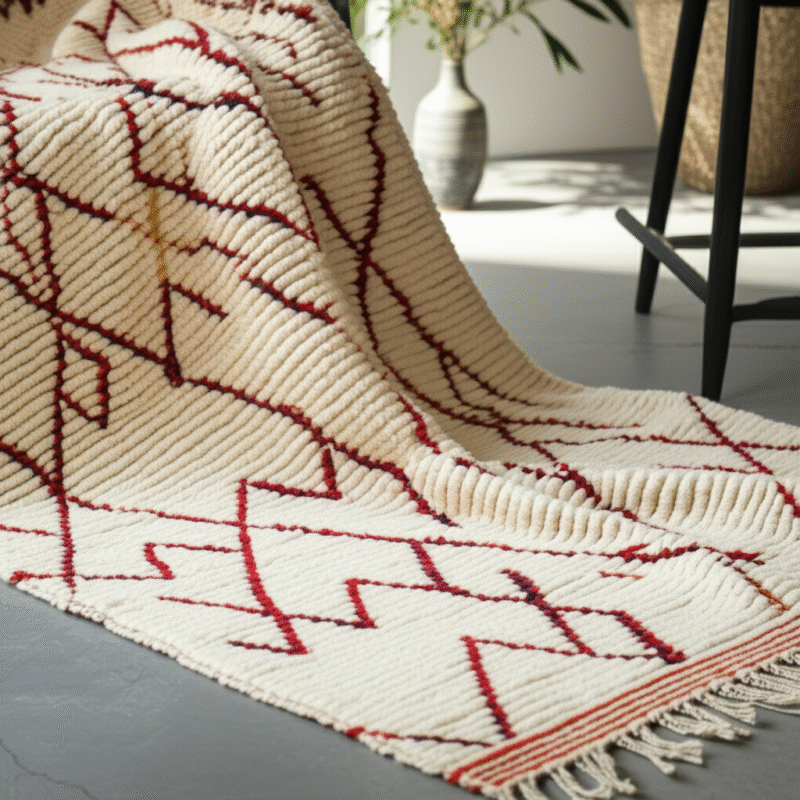
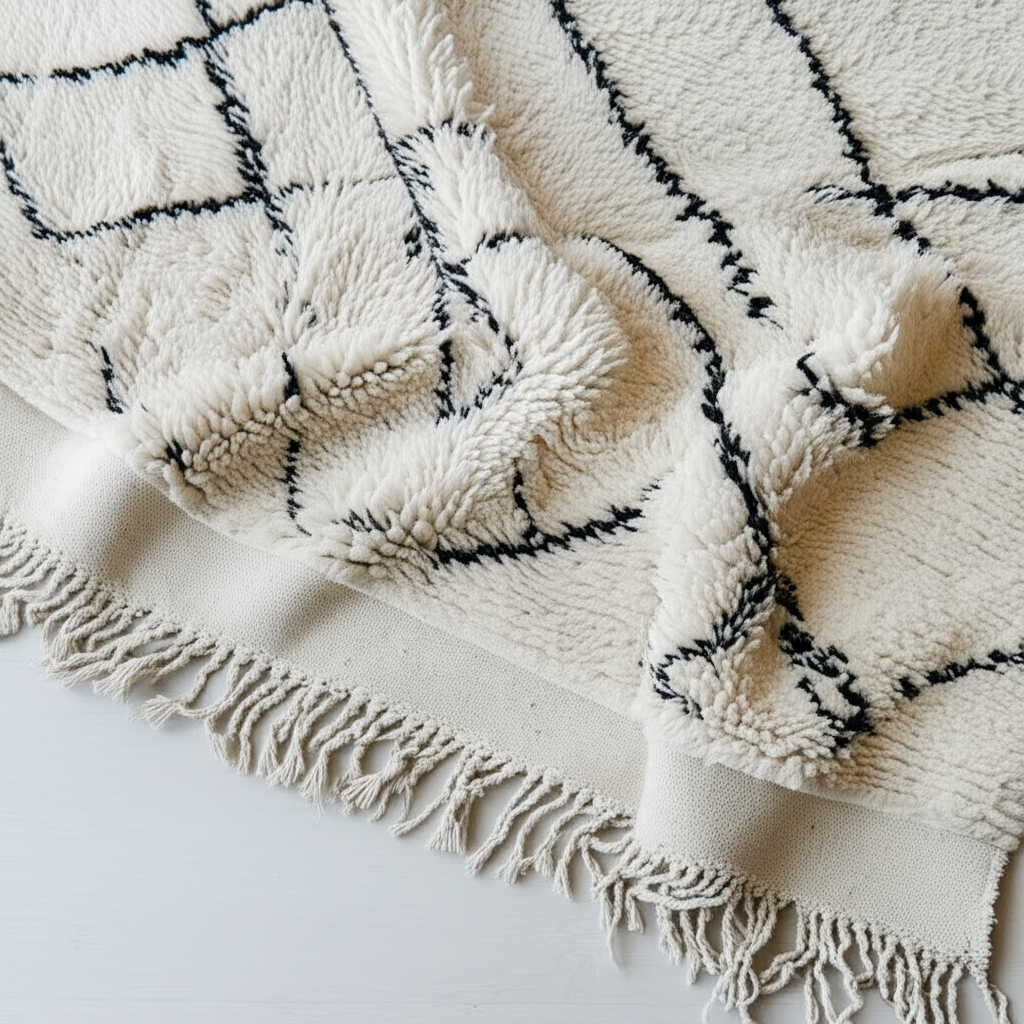
Beni Ourain: Perhaps the most recognizable Moroccan rug, the Beni Ourain is characterized by its plush, creamy white background and minimalist geometric designs, often in shades of brown or black. These rugs are known for their warmth, comfort, and versatility, fitting seamlessly into both modern and traditional interiors.
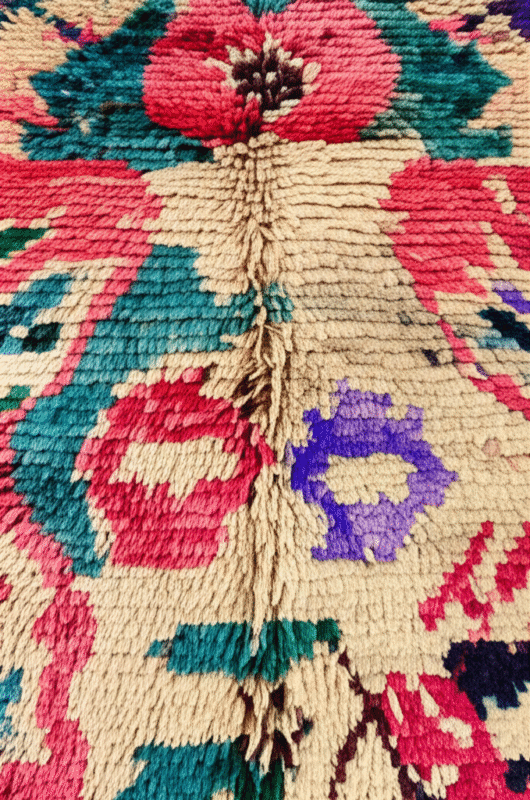
Azilal: Azilal rugs are renowned for their vibrant colors and playful, abstract designs. They often feature geometric patterns, tribal symbols, and depictions of everyday life, making them a bold and expressive statement piece.
Boucherouite: Unlike other types, Boucherouite rugs are not made from wool; instead, they are crafted from recycled materials such as cotton scraps, old clothing, and plastic fibers. This innovative approach results in rugs with unique textures, vibrant colors, and captivatingly quirky designs. Boucherouite rugs are a sustainable and artistic choice for adding a splash of personality to any room.
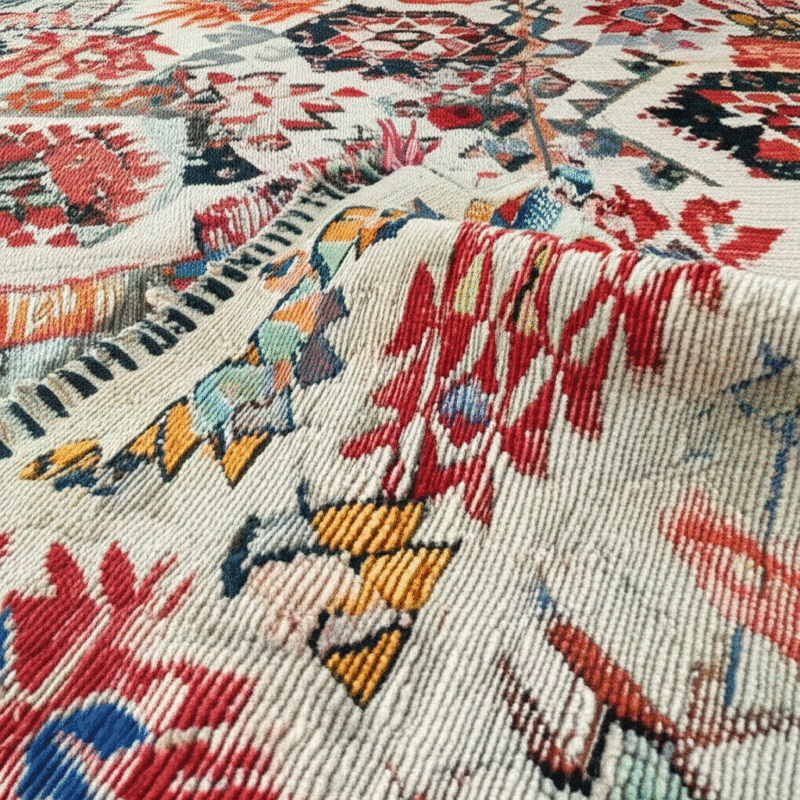
Kilim: While not strictly a rug, Kilim textiles are equally popular and originate from various Berber regions. Kilims are flatwoven tapestries, offering a lighter and more versatile alternative to pile rugs. They often feature geometric patterns and bold colors, making them ideal for wall hangings, throws, or even upholstery.
Caring for Your Handmade Moroccan Treasure
Owning a Moroccan rug is an investment in art and culture. Proper care will ensure its beauty and longevity for generations to come. Here are a few tips for maintaining your treasured rug:
Regular Vacuuming: Vacuum your rug regularly to remove dirt and debris. Avoid using beater bars, which can damage the delicate fibers.
Spot Cleaning: Address spills immediately by blotting with a clean, absorbent cloth. Avoid rubbing, which can spread the stain.
Professional Cleaning: Consider professional cleaning every one to three years to maintain the rug’s vibrancy and remove deeply embedded dirt.
Rotation: Rotate your rug periodically to ensure even wear and prevent fading from sunlight exposure.
Padding: Using a rug pad underneath your rug not only provides cushioning and prevents slipping but also protects the rug from wear and tear.
Incorporating Moroccan Rugs Into Your Home
Moroccan rugs offer endless design possibilities. Here are some ideas to inspire you:
Living Room Centerpiece: A large Beni Ourain rug can anchor your living room, creating a cozy and inviting space. Pair it with neutral furniture and pops of color for a balanced look.
Bedroom Oasis: Place a smaller Moroccan rug beside your bed to add warmth and texture to your bedroom. Soft, natural colors will create a serene and relaxing atmosphere.
Hallway Runner: Brighten up a hallway with a colorful Azilal rug. The vibrant designs will add personality and visual interest.
Wall Art: Hang a Kilim tapestry on your wall to create a unique and eye-catching piece of art.
Authentic Berber Craftsmanship: Finding the Right Piece
When purchasing a Moroccan rug, it’s important to look for authenticity and quality. Consider these factors:
Material: Authentic Moroccan rugs are typically made from high-quality wool. Inspect the fibers for softness and durability.
Weaving Technique: Examine the weaving for evenness and tightness. Hand-knotted rugs are generally more durable and valuable than machine-made ones.
Dyes: Natural dyes tend to be more subtle and nuanced than synthetic dyes. Ask the seller about the dyeing process.
Origin: Research the different Berber tribes and their rug-making traditions. This will help you understand the symbolism and meaning behind the designs.
Seller Reputation: Choose a reputable seller who is knowledgeable about Moroccan rugs and can provide information about their origin and history.
By investing in a handmade Moroccan rug, you’re not just acquiring a beautiful piece of décor; you’re supporting a centuries-old tradition and bringing a piece of Berber culture into your home. With their timeless appeal and enduring beauty, these rugs are sure to be cherished for generations to come.