

- Moroccan Rugs: Spotting Fakes – The Complete Guide!
- Understanding Authentic Moroccan Rugs
- Identifying Fake Moroccan Rugs: Red Flags to Watch Out For
- Examining the Weave & Knotting
- Asking the Right Questions
- Where to Buy Authentic Moroccan Rugs
- Investing in Authenticity: Worth the Effort
Moroccan Rugs: Spotting Fakes – The Complete Guide!
Moroccan rugs, with their vibrant colors, intricate patterns, and rich history, have become highly sought-after pieces in interior design. Their unique charm and connection to Berber culture make them more than just floor coverings; they are investments and works of art. Unfortunately, the increased demand has also led to a rise in imitations. This guide will equip you with the knowledge to confidently distinguish authentic moroccan rugs from fakes, ensuring you invest in a genuine piece of Berber history.
Understanding Authentic Moroccan Rugs
Before diving into detection methods, it’s crucial to understand what constitutes a genuine Moroccan rug. Authentic examples are handmade, primarily by Berber women in Morocco. Key characteristics include:
Material: Traditional rugs are made from natural wool, often sheep’s wool sourced locally. Some may incorporate cotton accents.
Dyes: Natural dyes derived from plants and minerals were traditionally used, resulting in rich, earthy tones. While synthetic dyes are sometimes used today (particularly in newer rugs), understanding the traditional palette is helpful for identification.
Patterns: These are varied and often symbolic, reflecting the tribe or region of origin. Common motifs include diamonds, geometric shapes, and representations of nature. These patterns aren’t simply decorative; they carry cultural and historical significance.
Imperfections: Because they are handmade, authentic rugs often exhibit slight irregularities and imperfections, which add to their charm and authenticate their origin.
Construction: Traditional techniques involve hand-knotting or hand-weaving, resulting in a durable and unique rug.
Identifying Fake Moroccan Rugs: Red Flags to Watch Out For
Now, let’s explore the telltale signs that might indicate a rug is not what it seems:
Unusually Low Price: Be wary if the price seems too good to be true. Authentic moroccan rugs, especially vintage or antique pieces, require significant time and skill to create, reflecting in their price. Extremely low prices are often an indication of mass production or inferior materials.
Perfect Symmetry and Uniformity: As mentioned earlier, imperfections are a hallmark of hand-crafted items. A rug with perfectly uniform patterns and perfectly straight lines is likely machine-made, not handmade by a Berber artisan.
Synthetic Materials: Check the fiber content. A strong chemical smell or the presence of synthetic fibers like acrylic or polyester is a major red flag. Authentic rugs primarily utilize wool. Burn test (carefully and discreetly!) a small, loose fiber. Wool will smolder and smell like burning hair, while synthetic fibers will melt and produce a plastic-like odor.
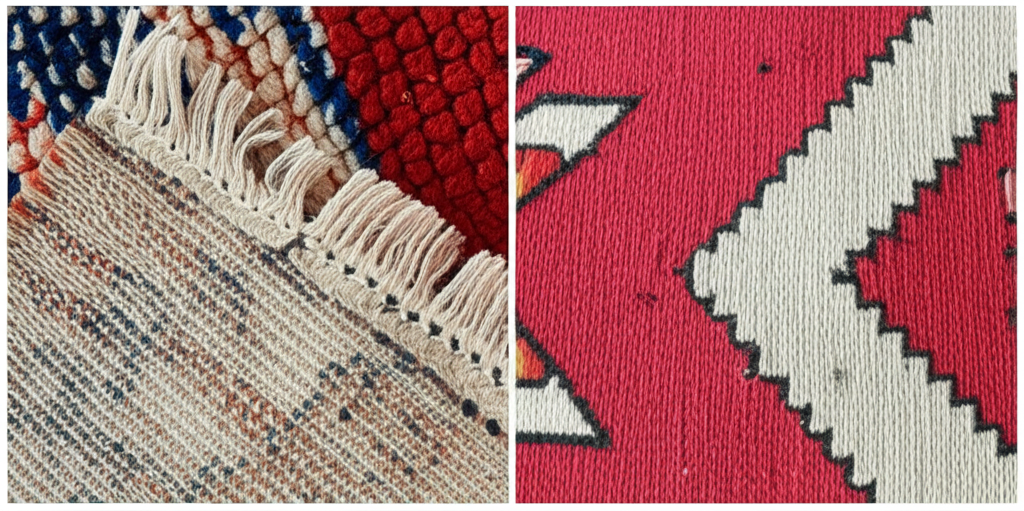
Machine-Made Knots: Examine the back of the rug. Hand-knotted rugs have irregular and non-uniform knots, while machine-made rugs have perfectly even and symmetrical knots.
Overly Bright and Uniform Colors: While some modern rugs use synthetic dyes, beware of colors that are unnaturally bright or perfectly consistent throughout the rug. Natural dyes tend to have subtle variations and can fade slightly over time, giving the rug character.
Lack of Documentation or Provenance: Reputable dealers will be able to provide information about the rug’s origin, materials, and construction. A lack of documentation or vague answers should raise suspicion.
Examining the Weave & Knotting
A close inspection of the weave and knotting technique can reveal a lot about a rug’s authenticity:
Knot Density: While not a definitive test, the knot density can indicate the level of craftsmanship. Hand-knotted rugs generally have a higher knot density than machine-made ones.
Weave Consistency: Look at the weave on the back of the rug. Authentic Berber rugs will show variations in the weave, reflecting the hand-crafting process.
Fringe Attachment: The fringe of an authentic rug is typically an extension of the warp threads, not sewn on separately.
Asking the Right Questions
When purchasing a rug, don’t hesitate to ask the seller questions. A knowledgeable and honest dealer will be happy to provide information about the rug’s:
Origin: Where in Morocco did it come from? Which tribe or region produced it?
Age: Is it a vintage, antique, or modern rug?
Materials: What type of wool was used? What types of dyes were used?
Handmade Process: Can they describe the process used to create the rug?
Where to Buy Authentic Moroccan Rugs
To minimize the risk of purchasing a fake, consider buying from:
Reputable Dealers: Seek out dealers who specialize in moroccan rugs and have a proven track record of selling authentic pieces.
Direct from Morocco: If possible, buying directly from artisans in Morocco can be a rewarding experience, allowing you to connect with the culture and ensure authenticity.
* Online Marketplaces with Strong Verification Processes: Some online marketplaces have systems in place to verify the authenticity of items sold by third-party sellers. Look for these features when shopping online.
Investing in Authenticity: Worth the Effort
While spotting fake moroccan rugs may seem daunting, the effort is well worth it. An authentic rug is not just a beautiful addition to your home; it’s a piece of history, a testament to Berber artistry, and a lasting investment. By understanding the characteristics of genuine handmade rugs and being aware of the red flags, you can confidently choose a piece that will bring joy and cultural richness to your space for years to come. So go forth, explore, and find the perfect authentic rug with confidence.